
Invest Smarter, Not Harder:Let Equity Investment Work For You!
Mastering the art of stock trading: where strategy meets opportunity.
By clicking "Open Demat Account," you agree to our Terms & Conditions, and confirm that you have read our Privacy Policy.
I hereby authorize the sending of notifications via SMS, messages, promotional, and informational content.

Major Stock Market Indices
Unlock the gateway to market opportunities by opening your trading account today.
By clicking "Open a Demat Account," you agree to our Terms & Conditions, and confirm that you have read our Privacy Policy.
I hereby authorize the sending of notifications via SMS, messages, promotional, and informational content.

Associated App Platform
The Next Gen Mobile Trading StockZ App
Seamless Trade Execution with GTT
Automate your trading with our GTT (Good Till Triggered) feature. Set your trigger price, and let the system execute your orders at the right moment. Enjoy hassle-free trading while staying in control.
Invest in the IPOs Now
Apply for the latest IPOs directly from our platform. Access detailed info on lot sizes, prices, and requirements. Don’t miss out—invest early with just a few clicks today!
Track and Manage Your Mutual Funds with Ease
Monitor your investments with our Mutual Fund dashboard. View your current value and invested amount easily. top-rated funds and diversify your portfolio effortlessly.
Simplify Your Investments with SIP
Set up your Systematic Investment Plan (SIP) effortlessly. Choose your frequency, start date, and duration, and let your wealth grow automatically. Start your SIP today!

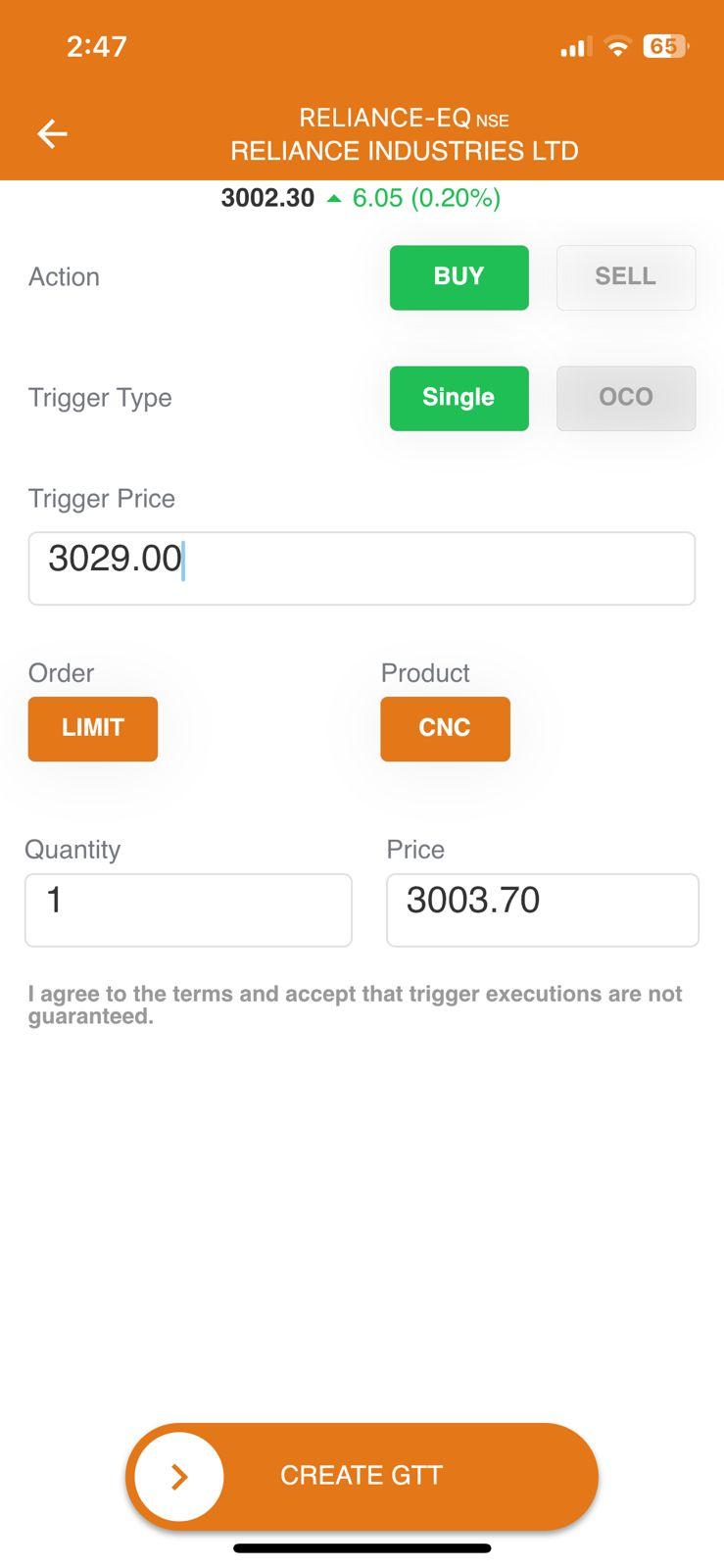


Discover new trading opportunities easily
Trends - view expected direction of a stock or index for the long, medium and short term
View balance sheet ratios, shareholding patterns, corporate actions and more
Access curated stock lists - Top Gainers, High PE, ROCE and more
Associated Web Platform
The Next Gen Web Application

Be a Market Leader Using Advanced Analytics
Unlock insights into top-performing stocks. Make informed decisions with real-time data and boost your investments. Stay ahead with expert analysis—explore today’s best options now!
In-Depth Stock Analysis at Your Fingertips
Analyze key market data with ease on our intuitive platform. Get real-time price movements, volume, and critical metrics. Make smarter trading decisions with our detailed charts and insights.
Track Highs and Lows with Real-Time Alerts
Stay updated on market movements! Our platform alerts you when stocks hit new highs or lows, helping you act quickly and capitalize on opportunities. Make informed decisions instantly!
How to Open a Demat Account with Findoc?

Step 1
Fill up your information on the sign up form
1
Step 2
Verify Mobile & Email
2
Step 3
Enter the KYC Details
3
Step 4
Get Demat Account details on the registered Email ID
4Documents Required to Open a Demat Account
PAN card is mandatory (Please ensure your photo and sign on the card are clearly visible)
Bank account statements of last 6 months, cancelled cheque and passbook (Any of these)

Aadhaar, passport, driving licence, voter ID, or bank account statements of last 6 months (Any of these)

Bank account statements of last 6 months, 3 months salary slips or ITR (Any of these)

Photo of your signature on a white paper (The signature must match the one on your PAN card)

One passport size photograph is a must (Provide clearly visible and latest photograph)
What is Stock Trading & Investing
Stock trading and investing mean buying and selling shares of companies listed on the stock exchange. When you trade, you try to earn from short-term price changes. When you invest, you keep shares in the long run to make money from the growth of companies and dividend payments. Both strategies have potential for creating wealth, but the risks and methods differ. With Findoc, you can simply open a Demat account and begin your trading or investing journey in a few clicks.
How Does Stock Trading Work?
Stock trading involves purchasing stocks at a lower price and selling them at a higher price to gain profits. Investors give buy or sell orders through brokers on stock exchanges such as NSE and BSE. Share prices constantly fluctuate during the day based primarily on demand, supply, market trends, and economic conditions of the country.
Difference Between Investing and Trading
| Aspect | Investing | Trading |
| Time Horizon | Long-term (months or years) | Short-term (minutes to weeks) |
| Goal | Wealth creation and compounding | Quick profits from price movements |
| Risk Level | Lower risk | Higher risk |
| Analysis Type | Fundamental analysis | Technical analysis |
| Frequency of Action | Fewer transactions | Frequent buying and selling |

Different Types of Stock Trading in India
There are several forms of trading in the Indian share market. Depending on your investment duration and strategy, you need to select the right one for you:Delivery Trading
This involves buying and holding stocks in your Demat account for more than one day. Ideal for long-term investors.
Intraday Trading
You buy and sell stocks during the day before the market closes. It is good for people who want quick profits from small price changes.
Swing Trading
Traders hold stocks for a few days to weeks. It is ideal for those who want to benefit from short-term trends using charts and indicators.
Scalping
This is quick trading where individuals make numerous small trades in a day. Each trade aims for a minimal profit.
Position Trading
It involves keeping stocks for several weeks to months and watching the long-term trends without any concern for short-term fluctuations.
Momentum Trading
Traders buy stocks that are rising fast and sell them once the price slows down.
Each type suits different risk levels and trading habits.
Understanding Charges in Stock Market Trading
When purchasing or selling stocks, there are certain fees you should be aware of:Brokerage
It is the charge taken by brokers per trade. Brokerage can be a fixed amount or a minimal percentage of your trade amount.
Transaction Charges
These are charges from the stock exchange that are dependent on your trade quantity.
GST & STT
GST is 18% on brokerage and service fees. STT is a buying/selling share tax.
SEBI Charges
A minimal charge taken by SEBI to balance the market.
Stamp Duty
A state government fee levied on the trade value.
IPFT Contribution
A contribution charged for the protection of the investor in the event of default by the broker.
Key Benefits of Stock Investments

Grow Your Money
Stocks can appreciate in value over the long term, allowing your wealth to grow.

Earn Dividends
Certain companies distribute profits to you in the form of dividend payments.

Beat Inflation
Stock gains tend to exceed inflation, preserving the value of your money.

Start Small
You can begin investing with just a little money and grow gradually.
Easy Access
Quickly buy or sell shares using Findoc.

Ownership
You become a part-owner of the company when you invest in its shares.

Tax Benefits
Long-term capital gains from stocks may offer tax advantages.

Diversification
Spreads your risk by investing in different stocks.
Control & Flexibility
Decide when to enter or exit as per your plan.

Transparency
All information regarding listed companies is publicly available to guide your decision.
Steps to Investing in Stocks
- 1Open an AccountComplete your KYC to open a Demat and trading account.
- 2Add FundsAdd funds to your trading account from your bank.
- 3Research StocksStudy company data or use expert tools to decide.
- 4Select a StockChoose shares that match your goals and risk appetite.
- 5Place a Buy OrderBuy stocks on the trading platform at your specified price.
- 6Track Your InvestmentCheck performance frequently and get updated.
- 7Set GoalsKnow when to hold or sell based on your investment targets.
- 8Review PortfolioAdjust your stocks over time to suit your plan.
- 9Learn ContinuouslyStay informed and upgrade yourself with market knowledge.
Basic Terms to Learn Before You Invest
It is ideal to know some simple terms before you begin investing in the stock market. These terms are useful in knowing how well a company is doing and if you should invest in it. Understanding them also assists you in comparing various stocks and making informed decisions.
Volume
This means the number of shares of a stock traded in a day. High volume usually means more interest in the stock.
52W High
This shows the highest price a stock . has reached in the last 52 weeks (1 year). It helps you know how high the stock has gone recently.
52W Low
This shows the lowest price a stock . has reached in the past 1 year. It helps you see the stock’s lowest point in that time.
Market Cap (Capitalisation)
This is the total value of a company’s shares. It is calculated by multiplying the share price by the number of shares. It tells you how big the company is.
PE Ratio (Price-to-Earnings Ratio)
This tells you if a stock is expensive or not compared to its earnings. A high P/E ratio can mean the stock is costly.
Dividend Yield
This shows how much return you get from dividends compared to the stock price. It’s useful if you want a regular income from your investments.
Return on Equity (ROE)
ROE tells you how well the company is using your money to make profits. Higher ROE means better performance.
Earnings Per Share (EPS)
EPS shows how much profit the company makes for each share. It helps compare the earnings of different companies.
Why Choose Findoc for Online Stock Trading & Investing?
Findoc simplifies stock investment and trading into a quick, easy, and simple process for all. Whether you are a first-time investor or an existing one, Findoc provides you with the means to invest wisely. You get the benefit of a simple interface with real-time market information, expert guidance, and easy order placement. With minimal brokerage charges and flexibility while investing, Findoc makes your journey hassle-free and cost-effective.
Additionally, you can manage your investments from anywhere using the mobile app. Whether you want to invest for the long term or trade regularly, Findoc offers customised solutions to suit your financial goals. Experience secure, seamless investing with Findoc.
Getting Started with Trading and Investing in the Stock Market
Begin your journey in the stock market easily with Findoc. Start by opening a free Demat and trading account online. Initiate your KYC using your PAN, Aadhaar, and bank details. After your account is active, add funds and start researching the listed companies. Start reading about stock performance, price history, and simple financial ratios. Explore educational tools at Findoc or consult an expert if you are a beginner. Invest small and increase your investment as you get more experienced. Keep track of your portfolio and stay updated with market news. With Findoc, you can invest and trade confidently from your phone or computer.
Tips to Pick the Best Stocks for Online Trading and Investing
Choosing the right stocks is important to generate consistent returns. The following are some useful tips:- Identify companies with strong past performance and growth potential in the future.
- Check financial ratios such as the P/E ratio, EPS, and ROE to assess company health.
- Identify the business model and examine whether it is future-ready and sustainable.
- Invest in different sectors of industry to reduce risk.
- Select stocks that trade actively (good volume) to have easy entry and exit.
- Go through quarterly results, management updates, and company news.
- Avoid stocks with sudden price increases unless backed by solid news.
- Take the help of Findoc's tools and guidance from experts to shortlist good stocks.
- Start small, budget, and check your selection on a regular basis.